Homemade Chicken and Sweet Potato Dog Food Recipe: A Complete Guide to Feeding Your Pup Right
Ever caught yourself staring at a bag of kibble, wondering what’s actually in it? I get it. That’s exactly why I started making homemade chicken and sweet potato dog food for my own furry buddy years ago. And honestly? It’s one of the best decisions I’ve made as a dog owner.
This isn’t just another recipe floating around the internet. I’m going to walk you through everything—the good, the tricky parts, and the stuff most articles skip over entirely. By the end, you’ll know exactly how to whip up a batch that your dog will practically inhale.
What Exactly Is Chicken and Sweet Potato Dog Food?
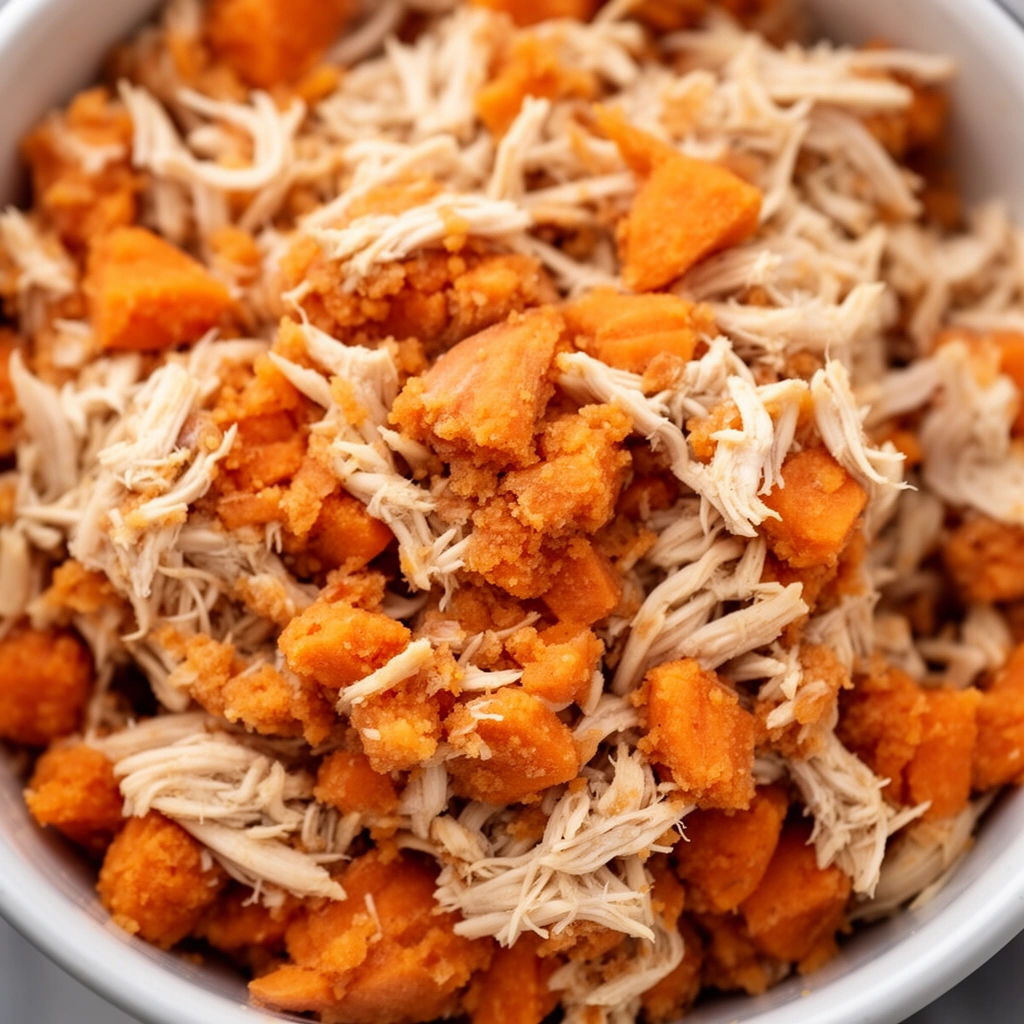
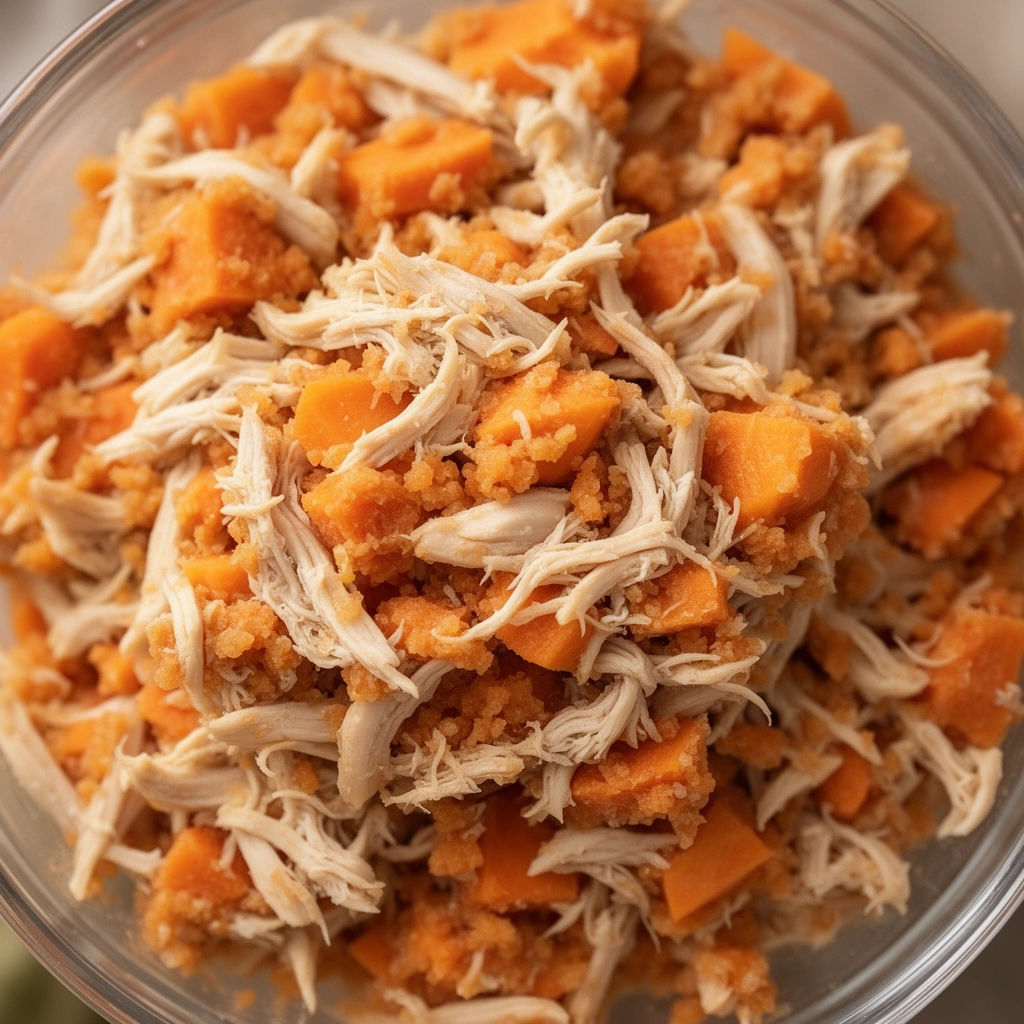
Let’s break this down simply. Chicken and sweet potato dog food is a homemade meal that combines lean protein (chicken) with a complex carbohydrate (sweet potato), plus a handful of supporting ingredients to round out the nutrition.
Think of it as a balanced plate for your pup—protein for muscle health, carbs for energy, and veggies for vitamins and fiber. It’s simple, but it’s not too simple. There’s a science to getting the ratios right.
Here’s why so many dog owners switch to this combo:
- Gentle on sensitive stomachs: Chicken and sweet potato are both easy to digest.
- Low allergen risk: These ingredients rarely trigger food sensitivities compared to beef or grains.
- Nutrient-dense: Sweet potatoes pack fiber, vitamin A, and potassium.
- Budget-friendly: Both ingredients are cheap and easy to find at any grocery store.
Key Ingredients You’ll Need
Before jumping into the cooking process, let’s clarify what each ingredient brings to the table. I find definition lists help make this crystal clear.
Chicken (boneless, skinless)
: The primary protein source. Provides essential amino acids for muscle repair and energy.
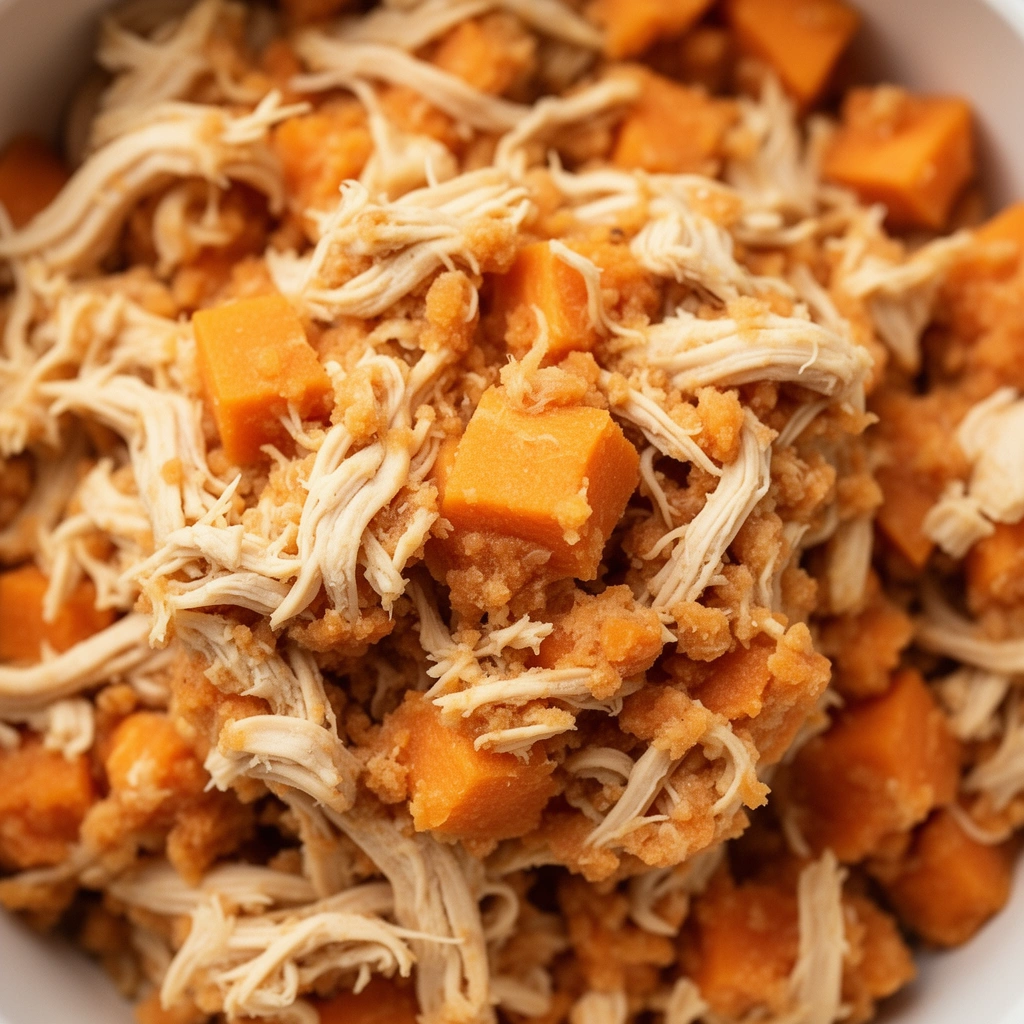
Sweet Potato
: A complex carbohydrate loaded with fiber, beta-carotene, and vitamin A. Helps with digestion and eye health.
Carrots
: Adds extra fiber and antioxidants. Supports immune function.
Green Beans
: Low-calorie veggie that’s great for weight management. Adds texture and nutrients.
Eggs (optional)
: Boosts protein content and adds biotin for a shiny coat.
Fish Oil
: Supplies omega-3 fatty acids for joint health and a healthy coat.
Brown Rice (optional)
: Additional carb source if you want to stretch the recipe or add more fiber.
Notice something? I didn’t just list chicken and sweet potato. Most recipes online stop there, but that leaves gaps in nutrition. Dogs need more than just two ingredients to thrive long-term.
Step-by-Step Cooking Process
Alright, let’s get into the kitchen. Here’s exactly how I make this recipe at home.
Step 1: Prep Your Ingredients
- Wash and peel 2 medium sweet potatoes.
- Dice them into small, bite-sized cubes.
- Cut 2 pounds of boneless, skinless chicken breast (or thighs) into chunks.
- Chop 1 cup of carrots and 1 cup of green beans.
Step 2: Cook the Chicken
- Place chicken in a large pot and cover with water.
- Bring to a boil, then reduce heat and simmer for 20-25 minutes until fully cooked.
- Remove chicken and let it cool slightly before shredding or dicing into small pieces.
- Save the broth—you’ll use it later.
Step 3: Cook the Sweet Potatoes
- Boil the diced sweet potatoes in a separate pot for about 15 minutes, until fork-tender.
- Drain and mash lightly, or leave them chunky if your dog prefers texture.
Step 4: Cook the Veggies
- Steam or boil the carrots and green beans for 8-10 minutes.
- Make sure they’re soft enough for easy digestion—dogs can’t break down raw veggies well.
Step 5: Combine Everything
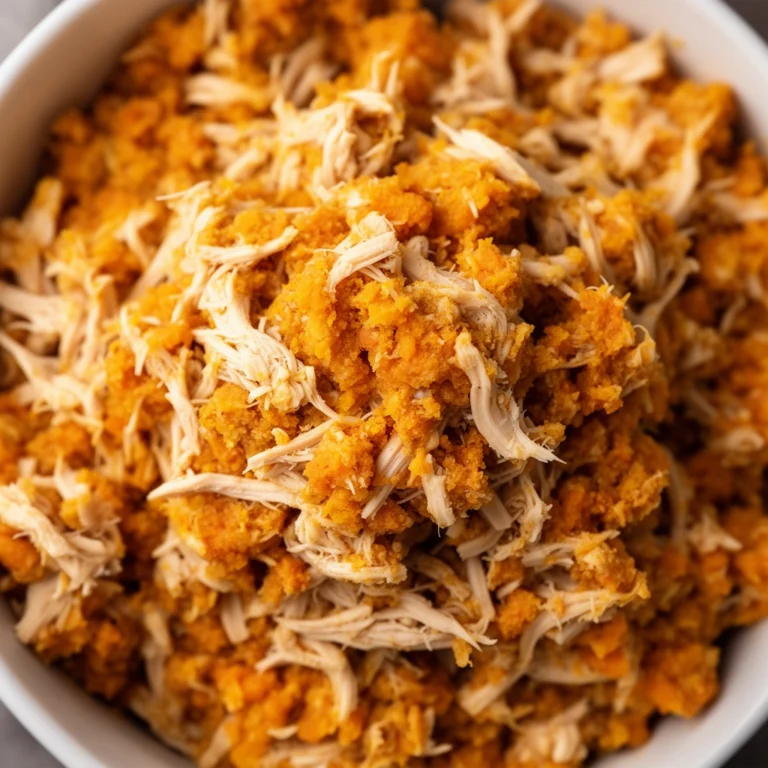
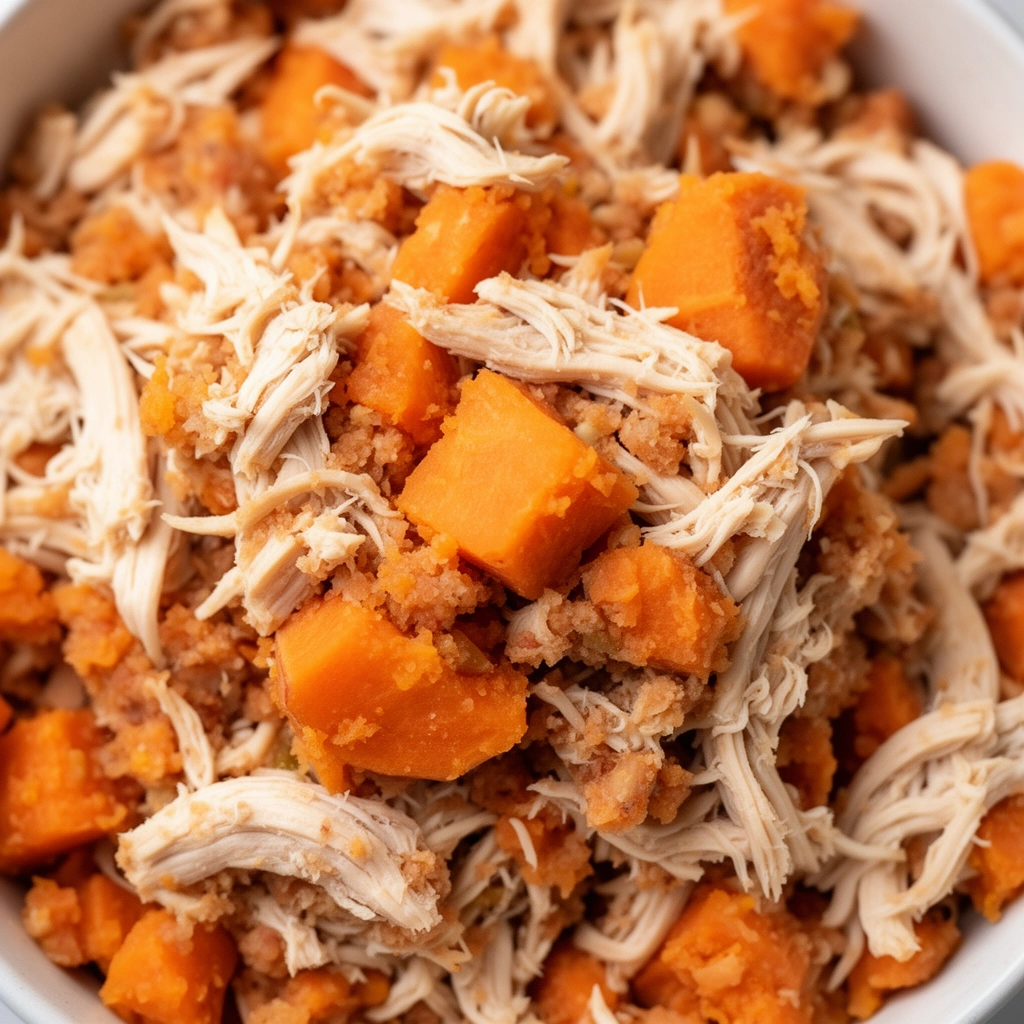
- In a large mixing bowl, combine the shredded chicken, mashed sweet potato, and cooked veggies.
- Add a splash of the reserved chicken broth to keep the mixture moist.
- Mix in 1 tablespoon of fish oil for every 2 pounds of food.
- If using eggs, scramble them separately and fold them in at this stage.
Step 6: Cool and Portion
- Let the mixture cool completely before storing.
- Divide into meal-sized portions based on your dog’s weight (more on that below).
- Store in airtight containers.
How Much Should You Feed Your Dog?
This part trips people up constantly. Portion size depends on your dog’s weight, activity level, and age. Here’s a general guideline:
- Small dogs (under 20 lbs): ½ to 1 cup per day, split into two meals.
- Medium dogs (20-50 lbs): 1 to 2 cups per day, split into two meals.
- Large dogs (50+ lbs): 2 to 3 cups per day, split into two meals.
I always recommend checking with your vet before making homemade food your dog’s primary diet. Every dog has unique caloric needs, and a professional can help you fine-tune the amounts.
Tips for Success
Making dog food at home isn’t hard, but a few small tweaks can make a big difference.
- Rotate protein sources occasionally: While chicken is great, adding variety (like turkey) prevents nutritional gaps.
- Add a calcium source: Homemade diets often lack calcium. Consider adding crushed eggshell powder or a vet-approved supplement.
- Freeze in batches: This recipe freezes beautifully. I make a big batch every two weeks and freeze individual portions.
- Introduce slowly: If your dog’s used to kibble, transition gradually over 5-7 days to avoid stomach upset.
- Use a food scale: Eyeballing portions leads to overfeeding or underfeeding. A cheap kitchen scale solves this instantly.
Common Mistakes and How to Avoid Them
I’ve made plenty of mistakes myself when I started. Here’s what to watch out for.
Mistake: Skipping the calcium supplement
: Homemade diets without bone content often lack calcium, which can cause long-term health issues. Always add a calcium source.
Mistake: Using seasoned or salted chicken
: Dogs don’t need salt, garlic, or onion. These can actually be toxic. Stick to plain, unseasoned meat.
Mistake: Feeding raw sweet potatoes
: Raw sweet potato is hard to digest and can cause blockages. Always cook it thoroughly.
Mistake: Overloading on treats or add-ins
: Too many extra ingredients can throw off the nutritional balance. Stick to the recipe ratios.
Mistake: Not consulting a vet first
: Homemade food, while healthier in many ways, still needs to meet specific nutritional guidelines. A vet or canine nutritionist can help ensure you’re not missing anything critical.
Variations You Can Try
Once you’ve mastered the base recipe, feel free to get creative. Here are a few variations I’ve experimented with:
- Turkey and Sweet Potato: Swap chicken for ground turkey for a leaner protein option.
- Chicken, Sweet Potato, and Pumpkin: Add canned pumpkin (unsweetened) for extra fiber and digestive support.
- Chicken and Sweet Potato with Quinoa: Replace brown rice with quinoa for added protein and amino acids.
- Grain-Free Version: Skip the rice entirely and increase the veggie ratio for dogs with grain sensitivities.
- Slow Cooker Version: Toss all ingredients into a slow cooker on low for 6-8 hours if you want a hands-off approach.
Storage Guidelines
Don’t let your hard work go to waste. Here’s how to store this dog food properly:
- Refrigerator: Keeps fresh for 3-4 days in an airtight container.
- Freezer: Lasts up to 3 months when properly sealed. I recommend using freezer-safe bags or containers, portioned by meal size.
- Thawing: Always thaw in the refrigerator overnight, never at room temperature, to avoid bacterial growth.
Final Thoughts
Making homemade chicken and sweet potato dog food isn’t just a trend—it’s a genuine way to take control of what goes into your dog’s bowl. You know exactly what’s in there. No fillers, no mystery ingredients, just real food that supports your dog’s health from the inside out.
I’ve seen firsthand how switching to this recipe improved my dog’s coat, energy levels, and even digestion. It takes a little extra time compared to scooping kibble from a bag, but the payoff is absolutely worth it. Give this chicken and sweet potato dog food recipe a try, and watch your pup thrive one homemade meal at a time.