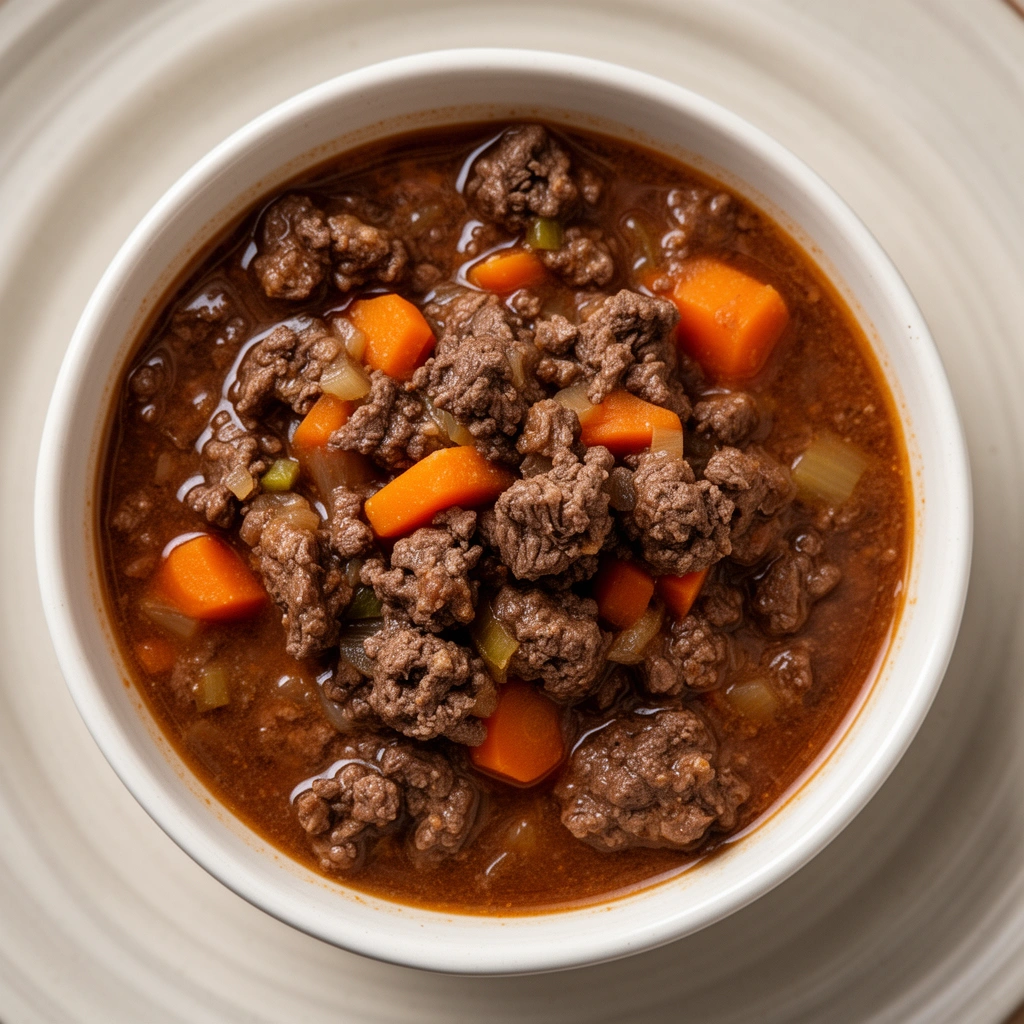
Homemade Beef Stew for Dogs: A Nutritious and Hearty Meal
Ever wonder if that beef stew simmering on your stove could actually be good for your dog? I get it. You’re standing there, stirring the pot, and your pup is giving you those puppy eyes like you’re the meanest person alive for not sharing. Well, good news, my friend. Homemade beef stew for dogs isn’t just possible, it’s actually one of the best things you can whip up for your furry buddy.
I’ve spent a lot of time digging into canine nutrition, testing recipes, and talking to vets about what actually works. And let me tell you, most articles out there only scratch the surface. They give you a basic recipe and call it a day. But there’s so much more to know if you want to do this right.
Why Homemade Beef Stew Matters For Your Dog
Store-bought dog food gets the job done, sure. But it’s often loaded with fillers, preservatives, and mystery meat you can’t even pronounce. When you make beef stew at home, you control everything. You know exactly what’s going into your dog’s bowl.
Beef stew gives dogs a protein-rich meal packed with vitamins, minerals, and moisture. That last part matters more than people realize. Dogs on kibble-only diets sometimes don’t drink enough water, and a stew helps fill that gap.
This isn’t about replacing your vet’s advice or turning your kitchen into a dog food factory. It’s about giving your dog a treat that’s actually good for them, something that feels like real food instead of processed pellets.
Key Terms You Should Know
Before jumping into the recipe, let’s clear up some terms you’ll bump into along the way.
Lean beef
: Cuts of beef with lower fat content, like beef chuck or round steak. These are easier on a dog’s digestive system and lower in calories.
Bone broth
: A liquid made by simmering bones for hours, packed with collagen, minerals, and joint-supporting nutrients.
Complete and balanced
: A term used by vets and pet nutritionists meaning a meal contains all the nutrients a dog needs in the right proportions. Homemade stew alone usually isn’t “complete and balanced” unless you add supplements.
Toxic vegetables
: Foods like onions, garlic, and chives that are dangerous for dogs even in small amounts.
Portion control
: Measuring food based on your dog’s weight, age, and activity level to avoid overfeeding or underfeeding.
What You’ll Need
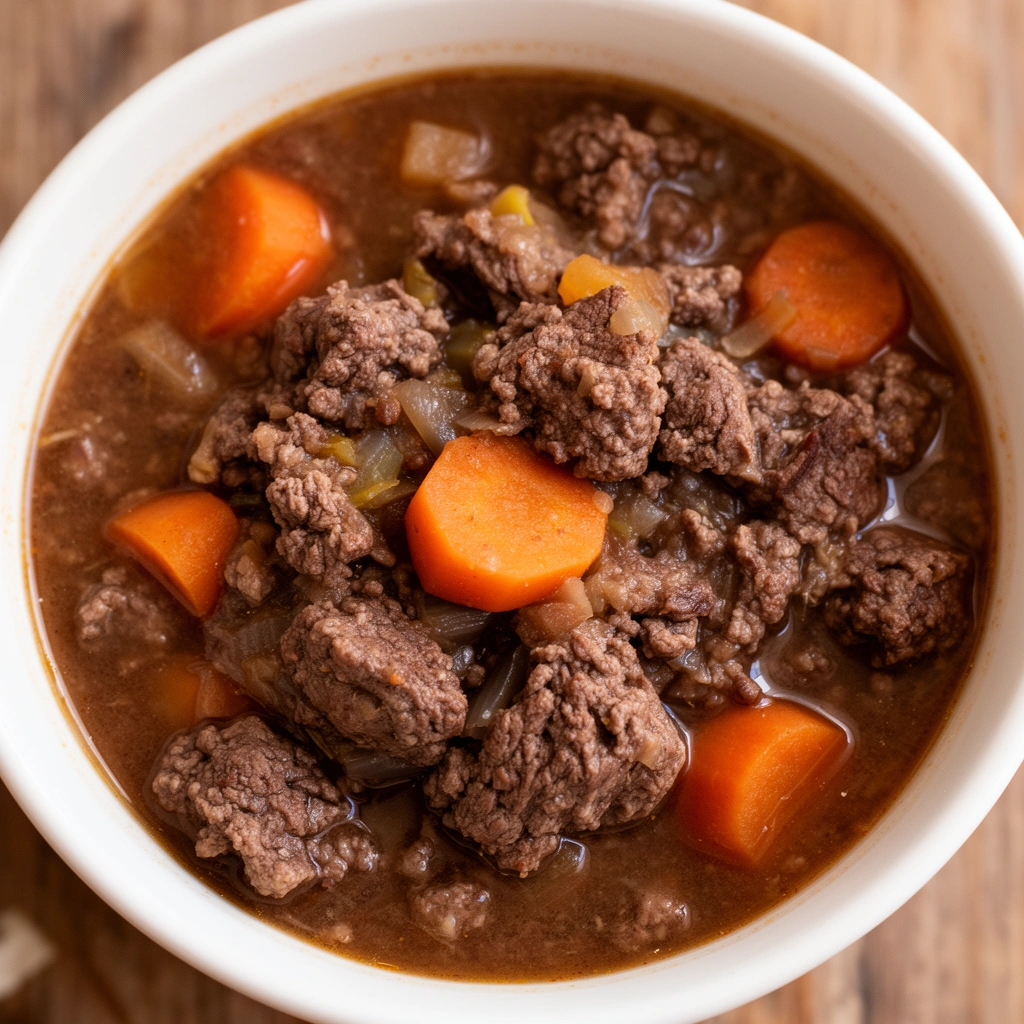
Here’s the shopping list. I like to keep things simple and dog-safe.
- 1 pound lean beef (chuck roast or stew meat), cut into small cubes
- 2 cups low-sodium beef broth or homemade bone broth
- 1 cup carrots, diced
- 1 cup green beans, chopped
- 1 cup sweet potato, peeled and cubed
- 1/2 cup peas
- 2 tablespoons plain pumpkin puree (not spiced pumpkin pie filling)
- 1 tablespoon olive oil
- Water as needed
Notice what’s missing? Onions, garlic, and salt. These show up in a lot of human stew recipes, but they’re a hard no for your dog’s bowl.

Step-by-Step Cooking Process
I’ll walk you through this like I’m standing right there in your kitchen with you.
- Heat the olive oil in a large pot over medium heat.
- Add the beef cubes and brown them on all sides. This locks in flavor and helps with texture.
- Pour in the broth, then add enough water to cover the meat completely.
- Bring it to a boil, then reduce the heat and let it simmer for about 45 minutes. This softens the beef and makes it easier for your dog to chew.
- Add the sweet potato and carrots first since they take longer to cook. Let them simmer for 10 minutes.
- Toss in the green beans and peas. Simmer for another 10 minutes.
- Stir in the pumpkin puree at the end. This adds fiber and helps with digestion.
- Let the stew cool completely before serving. Dogs have sensitive mouths, and hot stew can burn them.
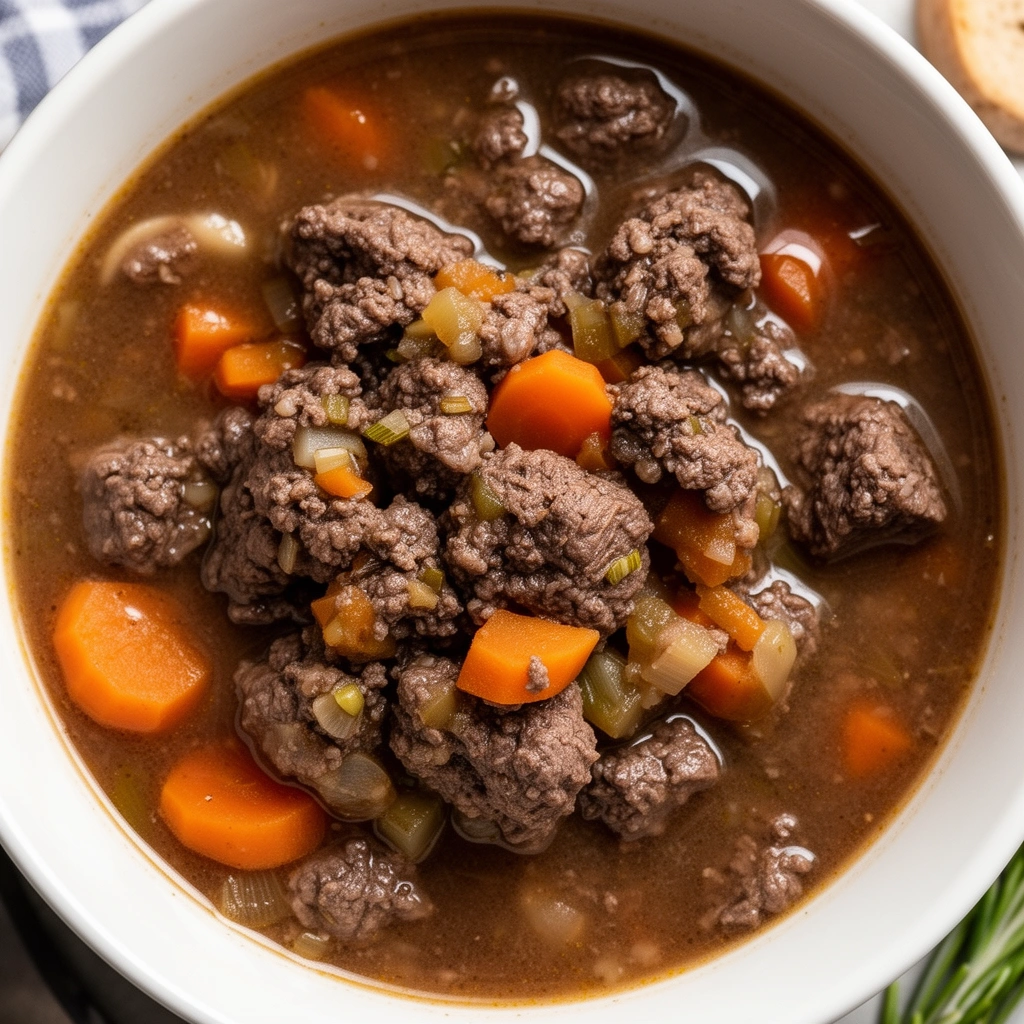
That’s it. No complicated techniques, no fancy equipment. Just a pot, some patience, and love for your dog.
How Much Should You Feed Your Dog?
This is where a lot of articles drop the ball. They give you a recipe but never explain serving sizes, which honestly matters just as much as the ingredients.
- Small dogs (under 20 lbs): 1/4 to 1/2 cup per meal
- Medium dogs (20-50 lbs): 1/2 to 1 cup per meal
- Large dogs (50-90 lbs): 1 to 2 cups per meal
- Extra-large dogs (90+ lbs): 2 to 3 cups per meal
Keep in mind this stew should be a supplement or treat, not a full replacement for your dog’s regular diet unless your vet has specifically approved it as a complete meal plan. I always tell people to check with their vet before making any big diet changes, especially for dogs with health issues like kidney disease or pancreatitis.
Tips For Success
Here’s what I’ve learned after making this stew more times than I can count.
- Always cut ingredients small. Big chunks can be a choking hazard, especially for small breeds.
- Cook the beef thoroughly. Raw or undercooked meat isn’t safe for dogs any more than it is for us.
- Skip the salt and spices entirely. Your dog’s taste buds don’t need it, and their kidneys will thank you.
- Store leftovers properly. I use airtight containers and freeze portions for up to three months.
- Introduce slowly. If your dog has never had beef stew before, start with a small amount to see how their stomach handles it.
- Rotate proteins occasionally. While beef is great, mixing in chicken or turkey stew now and then keeps things interesting and balanced.
Common Mistakes And How To Avoid Them
I’ve seen well-meaning dog owners mess this up in ways that could’ve been avoided.
- Adding onions or garlic for flavor: These are toxic to dogs and can cause serious health problems, even in small doses.
- Using too much salt: Dogs don’t need the sodium levels humans do. Too much can lead to dehydration or worse.
- Skipping the cooling step: Hot stew can burn a dog’s mouth and throat. Always let it cool before serving.
- Overfeeding: Just because your dog loves it doesn’t mean more is better. Stick to appropriate portions based on their size.
- Using fatty cuts of beef: Fatty meat can trigger pancreatitis in some dogs. Stick to lean cuts.
- Forgetting about food allergies: Some dogs are sensitive to beef. Watch for symptoms like itching, digestive upset, or ear infections after introducing new proteins.
Variations You Can Try
Once you’ve got the base recipe down, feel free to get creative. Here are some variations I’ve tried and loved.
- Chicken and vegetable stew: Swap beef for boneless chicken thighs for a leaner protein option.
- Turkey and pumpkin stew: Great for dogs with beef sensitivities, and pumpkin adds extra fiber.
- Fish stew: Using salmon or whitefish gives your dog a boost of omega-3 fatty acids for skin and coat health.
- Slow cooker version: Toss all the ingredients into a slow cooker on low for 6-8 hours if you want a hands-off approach.
- Grain-added version: If your vet approves, adding a small amount of cooked brown rice or oatmeal can add extra carbs for active dogs.
A Word On Nutritional Balance
I want to be upfront here because a lot of articles skip this part entirely. Homemade beef stew, no matter how good it tastes, isn’t automatically a complete and balanced meal. Dogs need specific ratios of protein, fat, calcium, and other micronutrients that a simple stew might not fully provide.
If you’re planning to feed this as a regular meal instead of an occasional treat, talk to your vet or a canine nutritionist about adding supplements like calcium powder or a multivitamin. This isn’t meant to scare you away from homemade cooking. It’s just about doing it responsibly.
Wrapping It Up
Making homemade beef stew for dogs is one of the simplest ways to show your pup some extra love while keeping their health in mind. I’ve walked you through the ingredients, the steps, portion sizes, mistakes to dodge, and even some fun variations to keep mealtime exciting.
At the end of the day, this recipe works because it’s simple, safe, and adaptable to your dog’s needs. Whether you’re making it as a special treat or working with your vet to turn it into a regular meal, homemade beef stew for dogs is a hearty, nutritious choice that your furry friend will absolutely love.